How drones are revolutionizing the construction industry
The construction industry is undergoing dynamic changes thanks to modern technologies, and one of the key elements of this transformation is drones. These small, remote-controlled devices have gained popularity in recent years, bringing a new quality to the design and construction process. Thanks to drones, engineers and architects can now easily monitor the progress of work, control the quality of workmanship and create precise site maps. As a result, project turnaround times are shortened, and costs associated with errors and corrections are significantly reduced. We invite you to discover how drones are changing the face of modern construction and the benefits they bring to companies in the industry.
Introduction to drones in construction
Drones, also known as unmanned aerial vehicles (BSPs), are gaining importance in the construction industry. They allow construction projects to be managed quickly and efficiently, making them an integral part of modern technology in the industry.
History and development of technology
The history of drones dates back to the early 20th century, when they were mainly used for military purposes. Initially they were used for military reconnaissance, but over time the technology began to penetrate other sectors, including construction.
The development of drones has been driven by advances in miniaturization of technology and falling costs. This has made drones more accessible to construction companies. Today’s drones are equipped with advanced sensors and cameras, making it possible to create accurate 3D models and map terrain from a bird’s eye view.
The next step in the development of drone technology is integration with artificial intelligence systems. This will allow for even more advanced analysis and automation of many construction processes. It is these innovations that make drones increasingly used in innovative construction projects.
Why drones are gaining popularity
Drones are gaining popularity due to their versatility and efficiency. They can easily reach hard-to-reach places, which is especially important on construction sites. This allows engineers to monitor the progress of work in real time.
Cost and time are other factors contributing to the growing popularity of drones. Operations that previously required a lot of resources can now be accomplished faster and cheaper with drones.
Drones also contribute to safety on construction sites, as they can replace humans in potentially dangerous tasks. As a result, the risk of accidents and property damage is reduced, which is crucial in any construction project.
Drone applications on construction sites
Drones are used on construction sites for a wide variety of tasks that help streamline and optimize construction processes. They are an invaluable tool in project management.
Monitoring of work progress
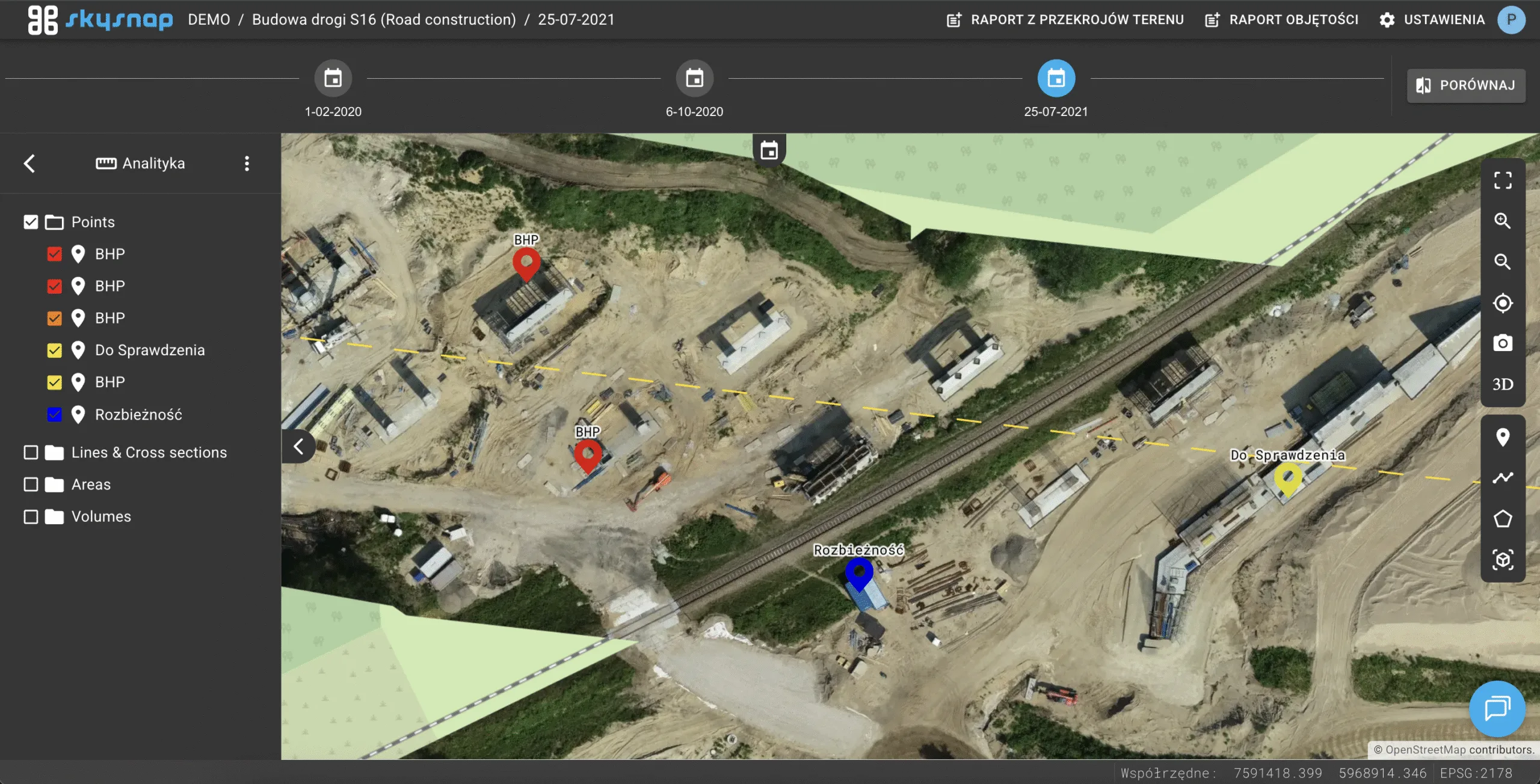
Drones make it possible to monitor the progress of work in real time. This allows project managers to keep track of the various stages of construction in real time. This allows them to quickly identify any delays and make necessary adjustments.
Drones can also be used to document the progress of work. Aerial photos and videos provide valuable information that helps retrospectively analyze the entire construction process. This type of documentation is also useful in case of disputes or the need to verify compliance with the design.
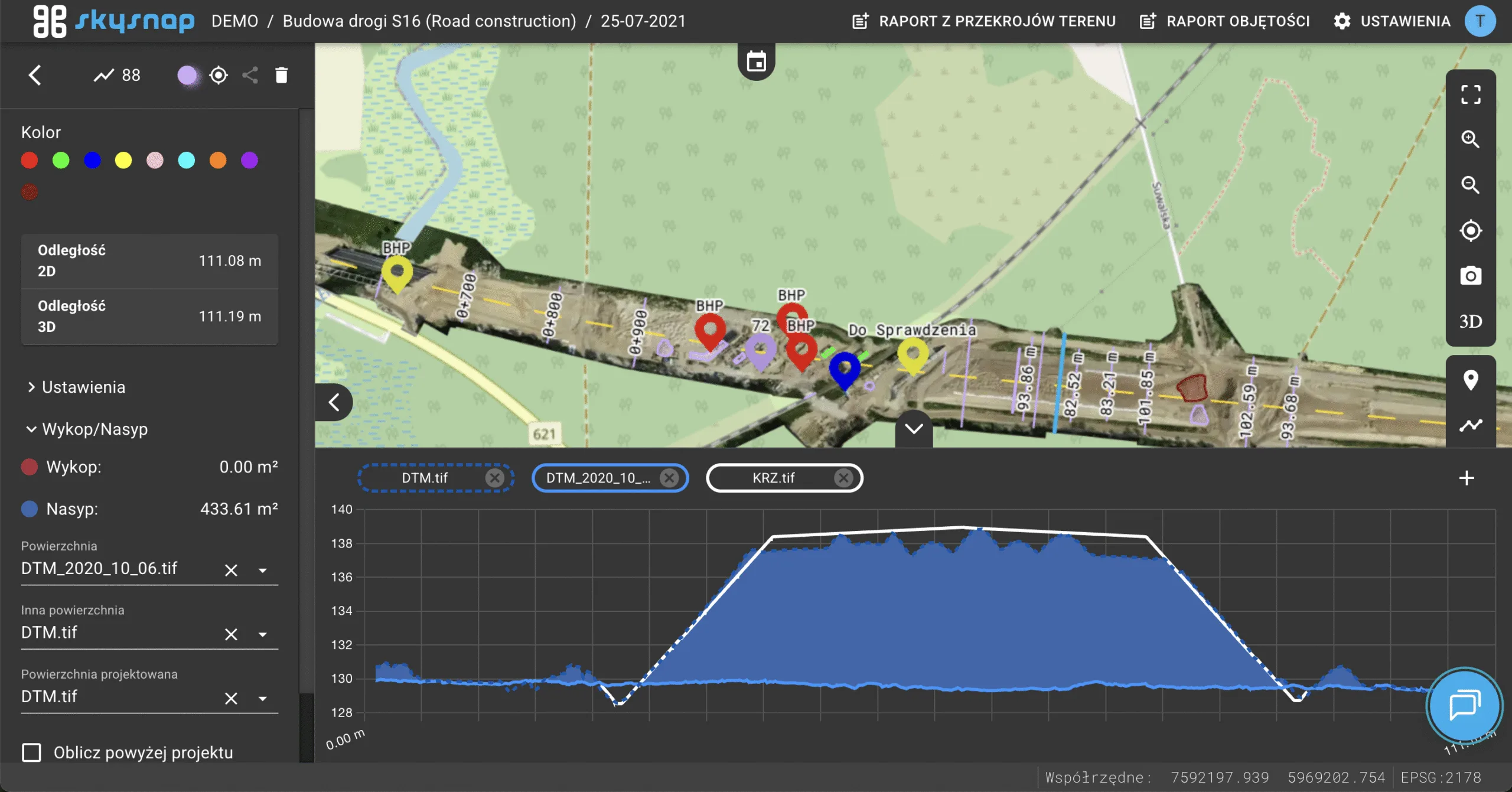
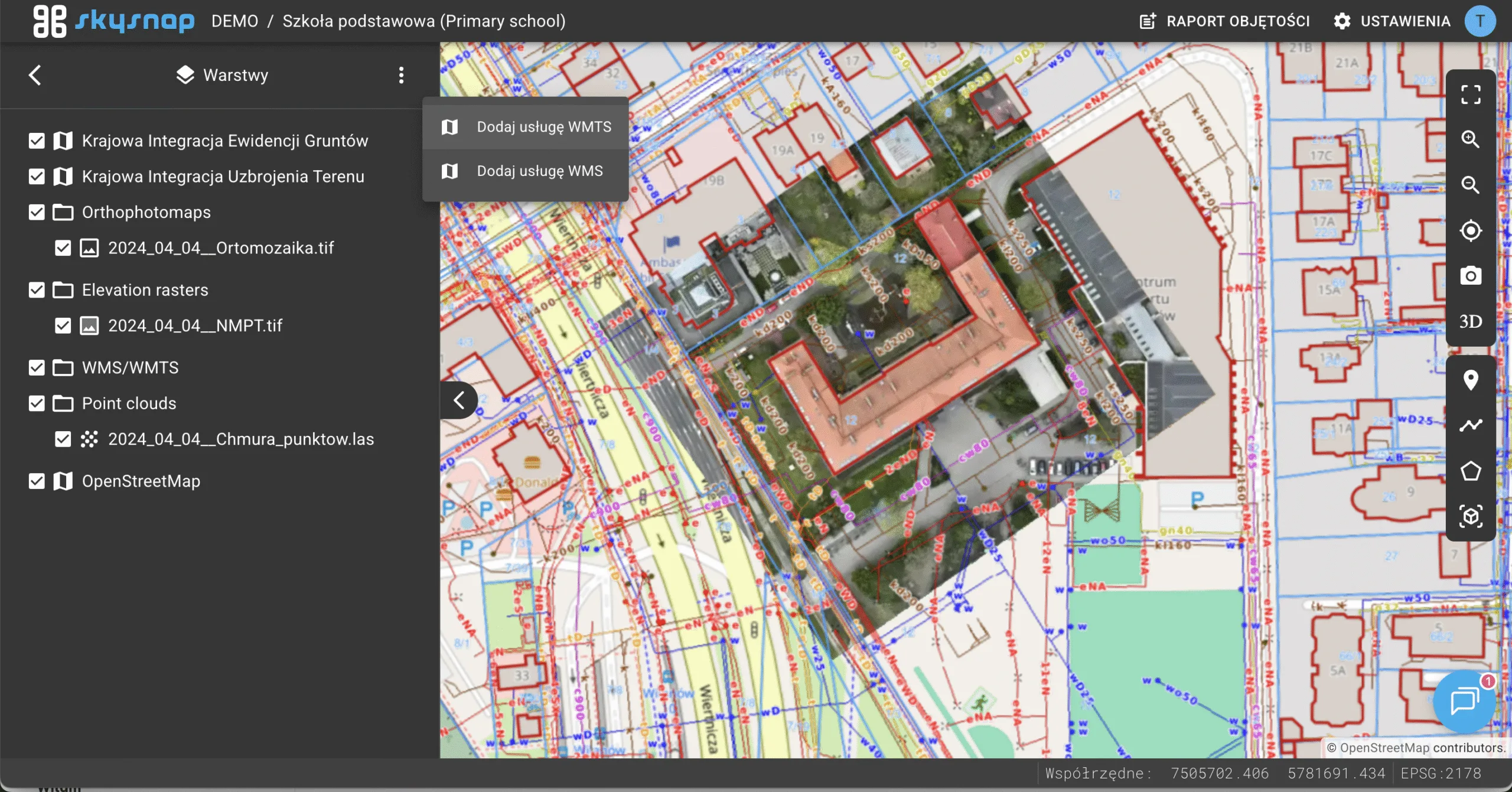
With drones, it is also possible to create site maps and 3D models. This makes it easier to plan the next stages of construction and ensures better coordination between the various teams involved in the project.
Inspection and security
Drone inspections are one of the most important applications on construction sites. Drones can perform inspections faster and more accurately than traditional methods. They can also reach areas that are difficult or dangerous for humans to reach.
In terms of safety, drones can monitor a construction site in real time, identifying potential hazards. This allows them to react quickly to dangerous situations and minimize the risk of accidents.
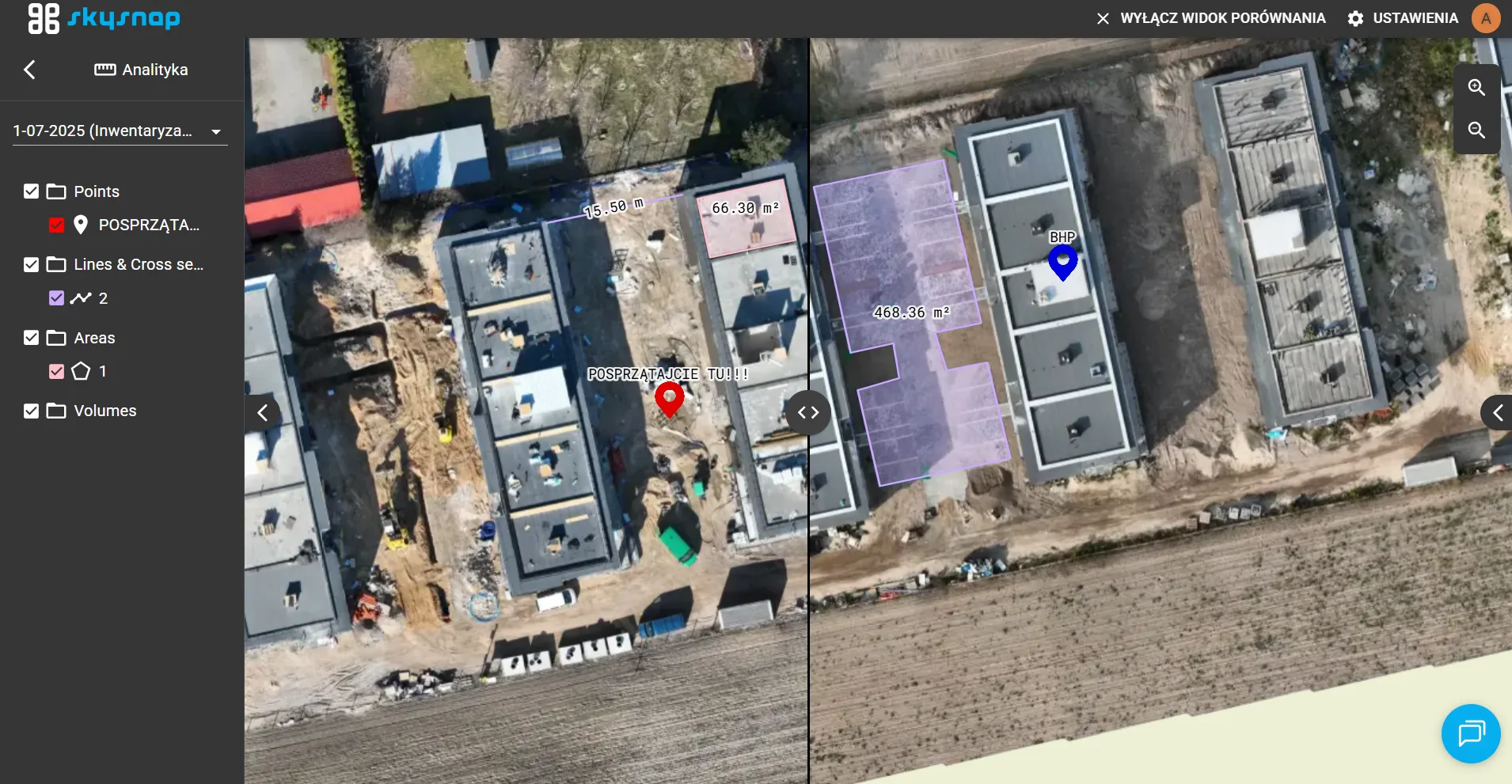
Drones can also be used to check the quality of workmanship. They can easily compare the current state of construction with the design plans, allowing quick detection of possible deviations and execution errors.
Advantages of using drones
The use of drones in construction brings many benefits that translate into efficiency and profitability of projects. The use of this technology is becoming more widespread.
Cost and time reduction
Drones help reduce costs by reducing the need for human resources and shortening project times. With rapid inspection and monitoring, problems can be identified at an early stage and costly fixes can be avoided.
Costs associated with hiring heavy equipment or wages for additional workers can be significantly reduced. Drones carry out tasks that previously required large work teams.
In terms of time, drones enable faster field analysis and inspections, helping to speed up the entire construction process. This enables faster response to changing conditions and real-time decision-making.
Increase precision and efficiency
Drones offer high precision in data collection. Thanks to advanced sensors and cameras, the information collected by drones is extremely accurate. This allows the creation of detailed models and terrain maps.
Operational efficiency is also significantly enhanced by the use of drones. They can operate in difficult weather and terrain conditions, providing data regardless of the time of day or weather.
Drones also contribute to better coordination of teams on the construction site. They allow all parties involved to have access to the same up-to-date data, allowing for more efficient decision-making and better project management.
Challenges and limitations
Despite its many advantages, the use of drones in construction also faces some challenges and limitations. It is worth understanding them in order to effectively implement this technology.
Regulations and licenses
One of the main challenges is regulation. Drone use requires knowledge of airspace regulations and obtaining the appropriate licenses. The process can be time-consuming and complicated.
Non-compliance can lead to fines and other penalties. Therefore, construction companies need to ensure that their employees are properly trained and have the necessary licenses to operate drones.
Increasingly restrictive regulations on drone use are being enacted in many countries, which could affect the feasibility of drone use in construction. Awareness of the regulations is key to avoiding legal problems.
Technical and logistical problems
The use of drones also comes with technical and logistical challenges. Drones are sophisticated devices that require regular maintenance and software updates to function properly.
The range and flight time of drones can also be a problem. Depending on the model, drones may be limited in how long they can operate on a single battery charge, requiring planning and coordination of site activities.
Logistical challenges also apply to managing the data collected by drones. Processing large amounts of information and integrating it with other project management systems can be complicated and require additional resources.
The future of drones in the construction industry
The future of drones in the construction industry looks promising. Innovations and new technologies are constantly developing their capabilities, which opens up new prospects for the industry.
Innovation and new technologies
Drones are becoming more and more advanced thanks to continuous innovation and technology development. The introduction of modern AI and machine learning systems will allow for even more automated operations and analysis.
Another innovation is the use of LiDAR technology, which makes it possible to map terrain even more accurately and create precise 3D models. This opens up new possibilities in the design and planning of construction projects.
Autonomous drones that can operate without constant human supervision are also increasingly being developed. This increases the flexibility and efficiency of their use on construction sites, which is crucial in the context of large and complex projects.
Potential development directions
In the future, drones may become an integral part of smart cities, where they will monitor and manage urban infrastructure. As a result, they will be able to improve the quality of life for residents and increase the efficiency of city management.
Drones may also find application in new areas of construction, such as green building and sustainable development. They will enable projects with low environmental impact.
Another development is the integration of drones with the Internet of Things (IoT), which will allow even better management of data and construction processes. This could create new business models and make construction companies more competitive.

Darmowy E-book
Dowiedz się, jakie usługi oferować, komu je sprzedawać i jak napisać skutecznego maila z ofertą. Gotowe szablony, porady i przykłady kampanii, które naprawdę działają.
Table of Contents:
Podoba Ci się artykuł? Podziel się nim z innymi!
Podoba Ci się artykuł? Podziel się nim z innymi!
Porady, wiadomości, spostrzeżenia
Powiązane artykuły
Sprawdź nasze artykuły i poznaj najnowsze informacje z branży.